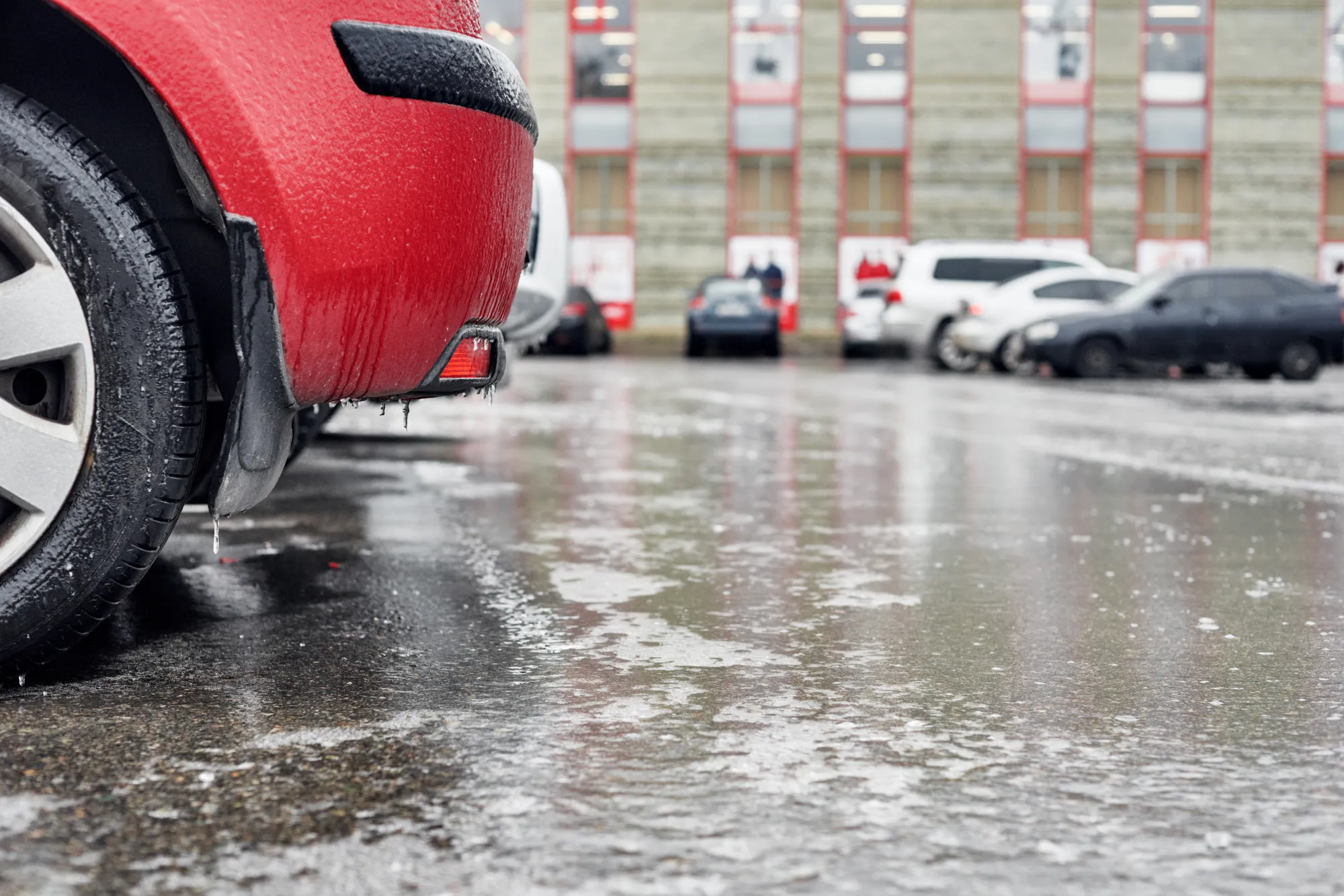
At CS Automotive we have watched one weather report play out two completely different ways on the same afternoon. A January system crosses Middle Tennessee. At our Brentwood shop on Church Street East the parking lot is just wet: cold rain, wipers on, nothing dramatic. Roughly the same hour, at our Monteagle shop on West Main Street, that same moisture arrives as freezing drizzle and glazes the pavement.
Nothing about the storm changed. What changed was the elevation.
Plenty of our customers do not live in only one of those two worlds. They live in Williamson County and commute to Sewanee or Tracy City, or run a Brentwood-area business with vehicles that climb the plateau every week. For those drivers the useful question is not “how bad are winters here.” It is “which of my two heres am I prepared for.”
If you have ever searched for a tire shop near you in November and wondered whether winter tires are overkill in Tennessee, the answer depends on which of those elevations you spend your mornings at. So here is what that gap actually does, and what it means for your winter car maintenance in Middle Tennessee.
Two Shops, 1,181 Feet Apart: What the Elevation Gap Actually Does
Brentwood sits at 745 feet above sea level. Monteagle sits at 1,926 feet. That is about 1,181 vertical feet between our two front doors, even though they share the same interstate corridor and the same regional forecast.
Elevation and temperature are linked, and in Tennessee the relationship has been measured. Tennessee climatology work published by East Tennessee State University puts the decrease of temperature with elevation at about three degrees Fahrenheit per 1,000 feet. Run that against 1,181 feet and you get roughly three and a half degrees.
Three and a half degrees sounds like nothing, and it would be, if it landed anywhere else. Winter storms here rarely arrive at 15 degrees. They arrive right around the freezing mark, wobbling either side of it. So when Brentwood sits at 36 degrees getting cold rain, the plateau sits at roughly 32 or 33 getting something else entirely. Same clouds, same moisture, different phase.
That is the real story of the gap. It is not that Monteagle gets buried while Brentwood stays clear. It is that the plateau spends far more of each winter on the wrong side of the freezing line, turning ordinary rain into ice.
The geography backs this up. The Cumberland Plateau averages around 2,000 feet, well above the Central Basin that Nashville sits in, a rolling plain averaging about 600 feet. Monteagle straddles a narrow stretch of that plateau, only about two miles wide, with steep drop-offs on either side, between Nashville and Chattanooga on Interstate 24. Down in Brentwood, snow and ice are an occasional winter nuisance but amounts are typically light.
Two shops, one region, two pretty different winters.
Same Storm, Different Road Surface: Rain in Brentwood, Glaze on the Plateau
Temperature is only half of why plateau ice matters more. The other half is the road underneath it.
The stretch of I-24 locals call Monteagle Mountain runs 12 to 13 miles through Grundy and Marion counties, crossing the plateau at a summit of roughly 2,000 feet. The eastern descent is a 6 percent grade running 4.1 miles and dropping 1,161 feet. The western downgrade is a 5 percent grade over about 4 miles, losing 778 feet. The eastern descent carries two runaway truck ramps, placed on the left because the terrain leaves no room on the right, plus a truck inspection station at the top and a brake adjustment station that opened in January 1992. That stretch deserves extra care, especially in bad weather.
A patch of ice on a flat Brentwood side street is a problem. The same patch on a sustained 6 percent grade is a different category of problem, because gravity works against you the whole time your tires are hunting for grip. Braking distances stretch, and a slide that would have ended in the next block keeps going. The surfaces that freeze first are also the ones you cannot see coming: bridges and overpasses losing heat from both sides, shaded curves that never see direct sun, and low spots where cold air settles overnight.
Tire Choice: Why Winter Tires in Monteagle, TN Start Earning Their Keep at 45 Degrees
Most drivers think about tires once they see snow on the ground. The better trigger is a thermometer, and the number on it is higher than most people expect.
All-season tire rubber begins stiffening below about 45 degrees Fahrenheit, and that stiffening reduces grip on cold, dry roads before any snow reaches the ground. Michelin makes the point directly, and Les Schwab describes the same behavior: all-season compounds turn rigid in colder temperatures, which costs grip, while winter tire rubber stays soft and flexible in the cold to help it hold the road. All-seasons can manage light snow and the occasional storm, but they are not designed for ice, deep snow, or sustained cold.
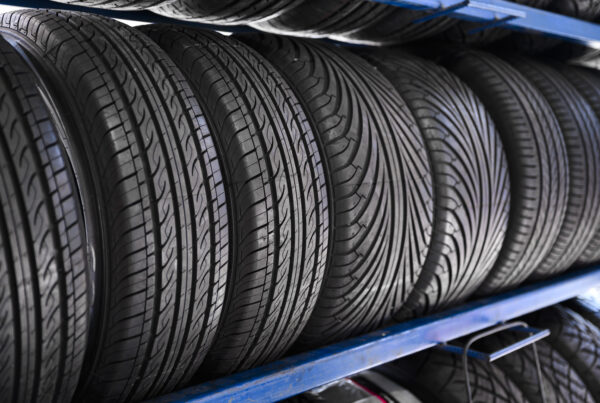
Winter tires attack this from two directions. The compound is formulated to stay flexible and grippy through the whole cold season, and the tread is much deeper than an all-season so it can clear packed snow and push slush aside instead of riding on top of it. A true winter tire carries the three-peak mountain snowflake marking on the sidewall, meaning it passed a standardized traction test on medium-packed snow. No snowflake, no winter tire.
The traction difference is large. Michelin cites a typical car at just 31 miles per hour on snow needing 52 yards to stop on summer tires, 26 yards more than the same car on winter tires.
So who needs what?
- Almost all Brentwood and southern Nashville metro driving: a quality all-season in good condition fits how few genuinely frozen days you see. Snow tires in Brentwood, TN are the exception rather than the rule, and the bigger risk here is a worn all-season, not the wrong category of tire.
- Regular winter driving on the plateau: this is where a dedicated set earns its keep. Winter tires in Monteagle, TN are not overkill on roads around Sewanee and Tracy City that freeze earlier, thaw later, and do it on a grade. You can shop tires with us and we will narrow it to your route.
- Time split between the two: prepare for the harsher elevation, not the milder one. Brentwood conditions are the easy case. They should never be the case you spec the vehicle for.
- One tire that leans colder, without a second set: all-weather tires stay flexible at lower temperatures than all-seasons, though not as low as a true winter tire. Worth asking us about.
Tire pricing moves constantly with size, availability and brand, so we will not print a number here that is wrong by the time you read it. Tell us what you drive and where you drive it, and we will put a current figure in front of you.
Tread Condition: Why a Good-Looking Tire Can Still Slip on the Plateau
A tire can look perfectly healthy sitting in your driveway and still be the reason you do not stop in time on the plateau.
Tread depth is what gives water and slush somewhere to go. As it wears down the tire loses its ability to clear the surface and starts riding on a film instead of biting through it. That failure mode shows up first in the conditions the plateau specializes in: a road that was wet at four in the afternoon and frozen by seven the next morning. Winter tires run much deeper tread than all-seasons because clearing snow and slush is the entire job.
Age matters separately from wear. Rubber hardens over the years regardless of mileage, and a hardened tire cannot conform to a cold road even if the tread blocks still measure fine. We went deeper on that in why good-looking tires can still be dangerous.
You can do a rough self-check by dropping a penny head-first into a tread groove. If the top of Lincoln’s head is fully visible, that tire is worn out. But a coin reports depth only, at the one spot you tested. It says nothing about uneven wear, cupping from a suspension problem, sidewall damage, or the age of the rubber. Those need a real look. If the car has also started drifting in its lane, our post on why your car pulls left or right explains what we check, and that problem often shows up in the tread first.
Cold-Weather Tire Pressure: The One PSI Per Ten Degrees Problem
This is the quiet one, and the one we see most on the first hard cold snap of the year. Tire pressure moves with air temperature. General Tire puts it plainly: pressure can fluctuate about one psi for every 10 degrees Fahrenheit. The pressure you set is only correct for the temperature you set it at.
Picture a driver who fills to spec on a 70-degree Brentwood afternoon in October, then parks overnight at Monteagle in a 20-degree cold snap. That is a 50-degree swing, roughly 5 psi, showing up as a dashboard warning light on the exact morning grip matters most. And the plateau already runs three and a half degrees colder as a baseline, so it hits that threshold first.
Most drivers file underinflation under fuel economy. It costs more than that. It degrades steering response and directional stability, hurts driving safety and tire durability, causes irregular wear, and can damage the inside of the tire in ways that lead to failure or a blowout. Steering response matters most on a mountain grade in freezing rain.
A few habits that fix this:
- Check pressure at the start of every month, and again before a long trip. In winter this stops being optional.
- Check it cold, before you drive. Set it after a highway run and you will be underinflated once the tires cool.
- Use the number on the sticker in your driver’s door jamb, not the one stamped on the sidewall.
- Do not dismiss a warning light because it cleared by afternoon. Warm sun pushing pressure back over the threshold does not mean the tire is holding air. A real leak returns tomorrow morning.
- Do not forget the spare.
Winter Car Maintenance in Middle Tennessee: What to Check Before a Plateau Commute
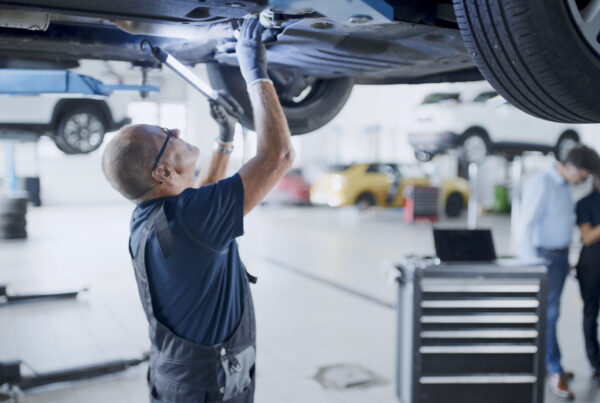
If your winter touches the plateau at all, a daily drive to Sewanee or just an occasional run up I-24 from Jasper or Pelham, have the vehicle looked at as a system instead of reacting to whatever fails first. When drivers bring a car into our tire shop in Monteagle, TN or our Brentwood location before the season turns, this is the list:
- Tires: category, tread depth, uneven wear and age, judged against where you actually drive rather than where you live.
- Pressure: set cold, to the door-jamb spec, spare included, monitoring system verified.
- Brakes: pad life and rotor condition, because a 6 percent descent asks far more of the system than city driving ever will.
- Battery: cold cuts the power a battery can deliver just as your engine needs more to turn over. One that starts fine in October can quit on the first genuinely cold morning.
- Wipers, washer fluid and lights: visibility is a safety system, and freezing spray and road salt punish streaking blades and summer-rated fluid.
- Coolant and antifreeze: the protection level keeps the system from freezing, and it degrades over time.
Fleet operators get the same list with more urgency: a vehicle running the I-24 corridor is on the plateau in every kind of weather, planned for or not. A van that handles Nashville winters comfortably is asked a much harder question the moment it starts up the mountain.
We will not quote parts and labor in a blog post, because a stale number is worse than no number. Bring us the vehicle and the route and we will give you a current one.
Get Winter-Ready at CS Automotive, in Brentwood or Monteagle
We have served Middle Tennessee drivers since 2006, from our Brentwood shop on Church Street East in Williamson County and our Monteagle shop on West Main Street. That is not a coincidence of real estate. It means we see both sides of this elevation gap every winter, and we can tell you what your vehicle needs for the roads you actually drive rather than the ones outside our window. Winter tires priced out, a brake inspection before the mountain, or a full pre-winter check: we will walk you through what we find and what can wait.
Ready for a current number on any of it? Get A Quote Today and tell us where you drive. We will take the elevation into account.